ServicesHome Battery Backup
Battery Backup for Hudson Oaks Homes
When utility power goes out, a home battery keeps the refrigerator, lights, internet and a few important outlets on, with no fuel and no engine running. We size it to your daily routine, place it where it stays cool and connect it neatly to the panel you already have.
Stored Power That Fits the Home You Already Have
A battery backup system stores electricity and switches your home over to it the moment utility power is lost. Most systems pair a wall-mounted battery with a gateway or transfer device that isolates your home from the grid during an outage. Lithium iron phosphate batteries are the common choice now. They tolerate many charge cycles and run cooler than older chemistries.
We approach a battery as a long-term part of your electrical system, not a gadget bolted to the garage wall. That means checking your panel and wiring first, choosing a location that protects the cells from heat, and setting it up so it can be serviced easily later. A well-placed battery on sound wiring simply lasts longer.
If you want to power the entire house, including central air, for a long outage, a standby generator may suit you better. Our Generator Installation page covers that. Many homeowners choose a battery for quiet, automatic coverage of the essentials.
What You Get With a Battery Install
Sizing from your loads
We list the circuits you want kept on and estimate how long the battery can run them. You can weigh capacity against runtime before settling on a size.
A look at the panel and wiring
Your main panel, breakers and connections are checked before anything is added. A loose lug or crowded panel is dealt with first, because the battery relies on the panel it connects to.
A clear layout for backed-up circuits
With partial backup, the circuits you choose move to their own subpanel, labeled so they are easy to follow when the power is out.
Placement and mounting
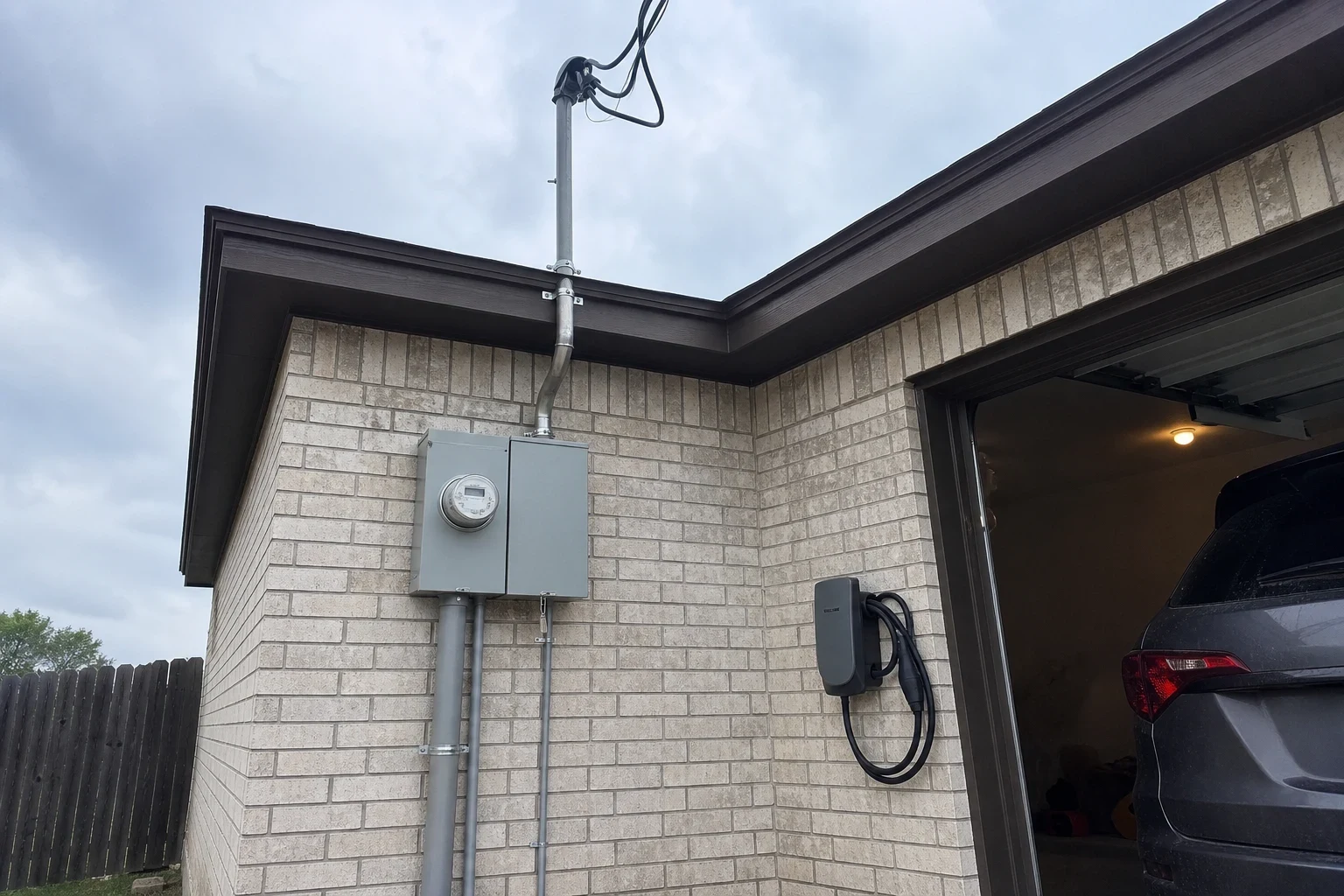
The battery goes on a solid wall with the maker's required clearances, kept out of afternoon sun when possible. Conduit runs straight, close to the structure and neatly finished.
Permit and the utility
We get the permit and book the inspection your local jurisdiction requires, and we work with the utility when that is needed.
Setup and a walkthrough
We set up the system, run a mock outage while you watch and show you how to check its status in the app or on the unit.
Signs a Battery Backup Makes Sense for You
Outages keep interrupting your day
If short outages regularly reset your clocks, drop your internet or stop work at a home office, a battery covers those gaps automatically.
Someone at home relies on power
Medical equipment, a well pump or a refrigerator full of medication are good reasons to keep a few circuits alive without anyone needing to act.
You want backup without fuel
A battery needs no gasoline, propane or oil changes, and it runs silently. That suits homeowners who would rather not maintain an engine.
Summer storms leave you uneasy
Strong spring and summer storms can knock out power for hours. A battery keeps fans, lights and food cold until the lines come back.
Your panel is already being updated
If you are planning a panel upgrade or remodel wiring, adding battery-ready circuits at the same time saves rework later.
The Steps of a Battery Installation
- 1
An assessment at your home
We check your panel, your service size and where the battery could mount, and we ask which circuits you care about most.
- 2
A plan on paper
You get the battery size, the circuits it will back up, any panel work and the permit steps in writing. Work begins only after you approve.
- 3
The install
Power is off for part of the day while we mount the battery and gateway, set the subpanel and run the conduit. We cover nearby floors and walls and clean up before leaving.
- 4
Inspection and first power-up
Once the inspection is done, we turn the system on, simulate an outage and make sure each backed-up circuit switches over the way we planned.
What Shapes the Cost of a Battery System
Battery projects vary more than most electrical work because the equipment and the home both play a part. We price after seeing your panel and talking through what you want covered, so the number reflects your actual job.
- Battery capacity
- More stored energy means longer runtime and more circuits covered. Adding a second battery unit raises the equipment cost.
- Partial or whole-home backup
- Covering a handful of essential circuits through a subpanel costs less than backing up the full panel, which needs a larger gateway and more capacity.
- Condition of your panel
- An older or full panel may need repair or replacement before a battery can be connected safely. We tell you plainly if that is the case.
- Distance and mounting
- A long conduit run between the panel and the battery, or a location that needs extra wall preparation, adds labor and material.
- Permits and inspection
- Permit fees and inspection requirements depend on the jurisdiction and are included in the scope you approve.
Questions About Home Batteries
Something not covered here? (682) 319-2260
How many hours will a battery keep my house going?
That comes down to the battery's capacity and what stays on. One unit can often carry a refrigerator, lights, internet and some outlets for many hours. Central air uses much more and cuts that time sharply. At the visit we estimate runtime for the circuits you pick.
Will a battery power my central air?
Some systems can start and run it, particularly with more than one battery and a soft-start device on the compressor, but the stored energy drains quickly. If staying cool through long outages matters most, we will talk about whether a generator suits you better.
Will the Texas heat wear my battery out sooner?
Heat is the biggest cause of faster battery wear. For that reason we pick a shaded wall or the garage when we can and keep the airflow clearances the maker requires. Good placement is an easy way to protect what you spent.
Battery or generator: which suits me?
A battery runs silently, uses no fuel and takes over instantly, but its stored energy runs out. A standby generator keeps going while it has fuel and handles bigger loads, though its engine needs regular service. Some homes have both, and we can explain how they would work side by side.
How much upkeep does a battery need?
Not much from day to day. Glance at the status app once in a while, keep the space around the unit clear and have the connections and subpanel checked from time to time. Our Torque & Cleans service includes that connection check.
Does my panel have to be upgraded first?
Not in every case. A healthy panel with room for the connection can usually take the battery directly. If yours is crowded, damaged or too small, we explain why and lay out a panel upgrade to do before the battery is installed.
Start With a Look at Your Panel
We will review your panel, find the right spot for a battery and talk through which circuits to keep running. You get a clear plan before any work begins.