ServicesEV Charger Installation
Home EV Charger Installation in Hudson Oaks
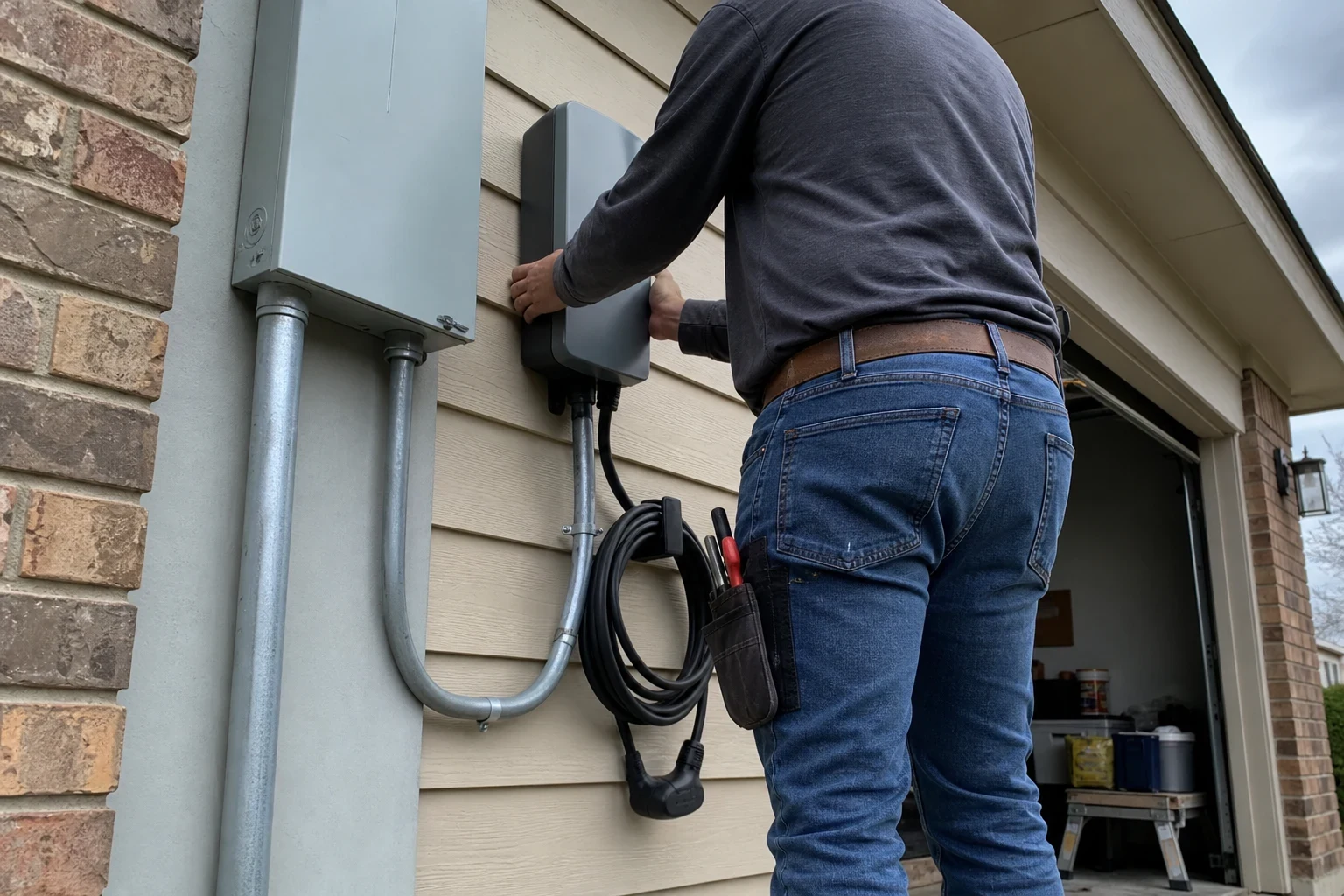
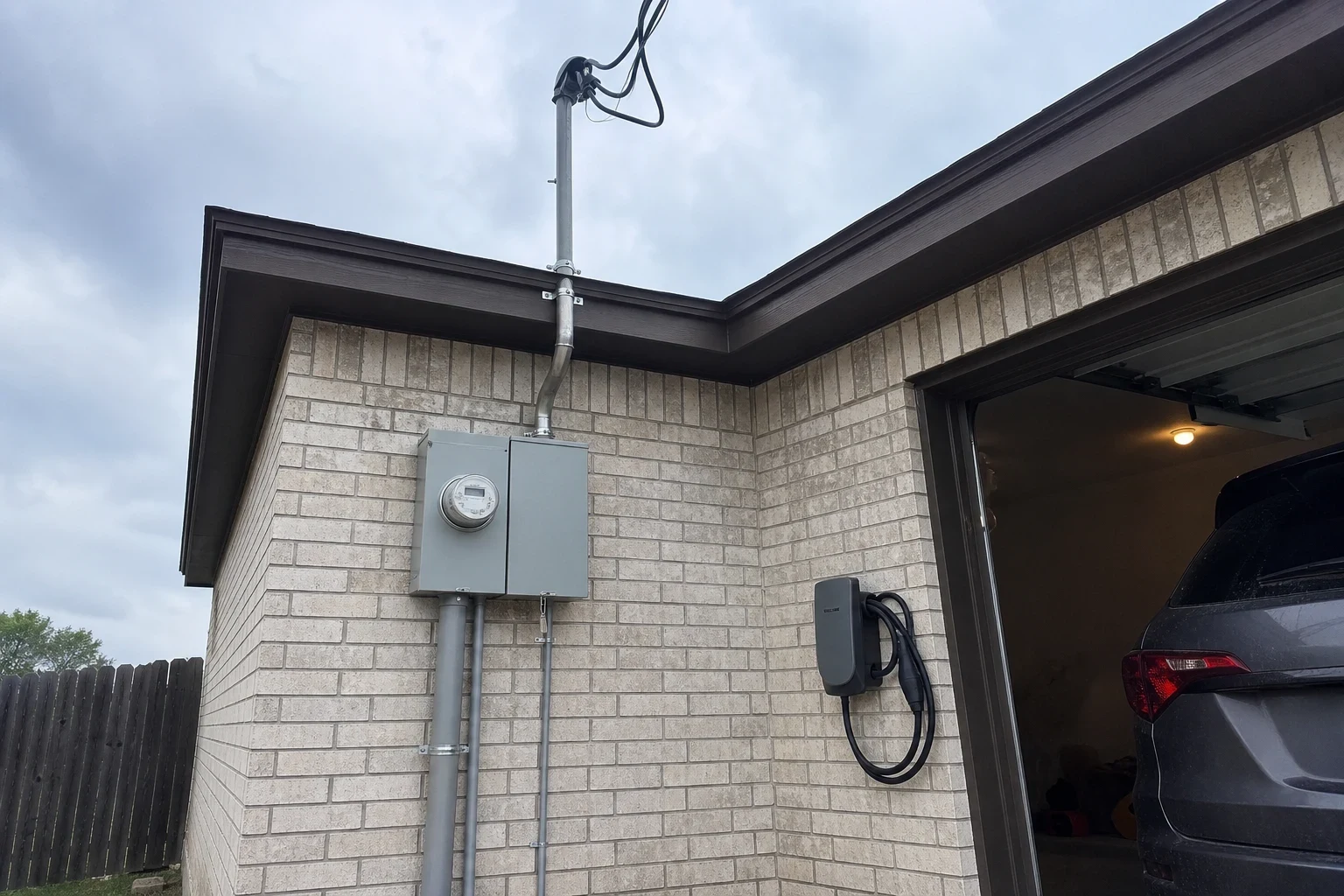
We put Level 2 chargers in garages and on outside walls. Before anything else, we check your panel and service so the new circuit suits what the house already has. The result is a neat, labeled install made to handle years of charging every night.
A charger that works with the system you have
Most EV owners outgrow the standard wall outlet quickly. A 120-volt plug adds only a few miles of range per hour, which falls short once the car becomes the daily driver. A Level 2 charger on a dedicated 240-volt circuit can usually restore a typical commute overnight.
The charger itself is the simple part. How well it serves you depends on the wiring behind it: the size of your electrical service, the spare capacity in your panel, the length of the run to your parking spot and the quality of every connection along the way. A charging circuit carries a heavy load for hours, night after night. That steady draw finds weak connections that ordinary household use never would.
Wherever it can safely go, we fit the charger to your existing equipment. If the panel truly lacks room, we tell you plainly and explain the options, including load management or one of our panel upgrades.
What the installation includes
A load calculation first
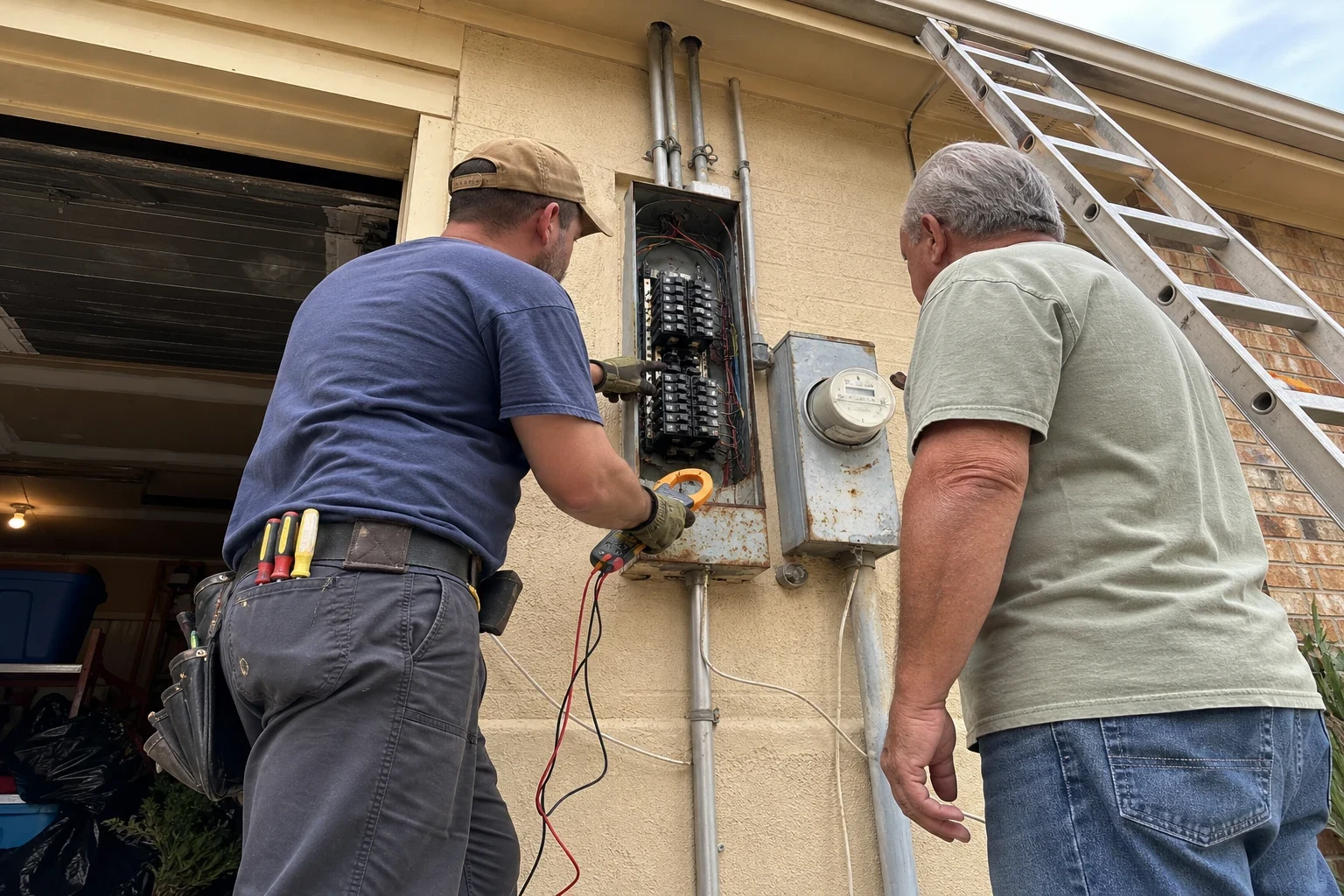
We add up the major loads in your home, such as the air conditioner, range, dryer and water heater, and compare them with your service size. That tells us which charger amperage your panel can support without strain. We do this before you buy a charger, or before we install the one you already have.
A dedicated 240-volt circuit
A new breaker and correctly sized copper conductors run from the panel to the charger location. We match the wire gauge to the circuit and the length of the run, so the cable stays cool through a long session.
Hardwired or plug-in mounting
We can hardwire the charger or install a heavy-duty receptacle for a plug-in unit. We walk you through the tradeoffs, including how each holds up to daily use.
Outdoor-rated parts for driveway parking
For chargers mounted outside, we use weather-rated boxes, fittings and conduit, and we seal the wall penetration. That matters for equipment that sits in direct North Texas summer sun.
Permit, inspection and labeling
We handle the permit and inspection as required by your local jurisdiction. We label the new breaker in the panel and leave you a short note on what was installed.
Testing and setup
We check voltage and confirm every termination is tightened to spec. Then we run the charger with your vehicle connected where possible and help you pair the app if your unit has one.
Signs it's time for a dedicated charger
- Overnight charging isn't keeping up
- If you wake up short of a full day's range, a standard outlet has reached its limit. A Level 2 circuit closes that gap.
- You're relying on an extension cord
- Extension cords and light-duty adapters aren't made to carry current for hours at a time. A warm plug or a discolored outlet face is a reason to stop using it and have the circuit looked at.
- The garage breaker trips mid-charge
- Garage outlets often share a circuit with lights, a freezer or tools. Adding a car pushes that circuit past what it was sized for.
- A second EV is on the way
- Two cars change the math on your panel. Planning for both now can save you from opening the walls twice.
- Your panel looks full
- No open breaker spaces doesn't always mean no capacity. We can tell you what is actually available and what it would take to add a circuit.
How an EV charger install runs
- 1
Service visit and walkthrough
We look at your panel, your service size and where you park, and we talk about the charger you own or are considering. You get a written scope and estimate before any work is scheduled.
- 2
Permit and route planning
We file the permit where it's required. Then we plan the cable route for the cleanest finish, whether that's through the attic, in conduit along the garage wall or behind finished surfaces when practical.
- 3
Installation day
Most installs take part of a day. Power to your home goes off only while we land the new breaker. We protect floors and clean up dust and wire scraps before we leave.
- 4
Testing and inspection
We test the circuit under load and finish setting up the charger. If an inspector needs to see the work, we coordinate that visit with you.
What drives the price of a charger install
We quote each install once we have seen your panel and where you park, since two homes that look alike can need very different work. The written estimate splits out labor, materials and permit costs so you know where every dollar goes.
- How far the charger is from the panel
- When the garage backs up to the panel, the run is short. A detached garage or a driveway on the opposite side of the house takes more wire, more conduit and more hours.
- Room left in the panel
- Spare capacity and an open slot keep things simple. A panel that is full or too small may need load management equipment or a panel upgrade.
- The charger's amperage
- Chargers with higher amperage call for thicker wire and a bigger breaker. We help you pick a size that matches how you drive, not just the biggest one sold.
- Finished or open walls
- Pulling wire behind finished drywall takes longer than running conduit across open framing. When both routes are possible, we show you each one.
- Inside or outside location
- An outdoor spot needs weather-rated parts and sealed wall openings, which add a little to the material cost.
Common EV charger questions
- Will you install a charger I bought myself?
- Usually, yes. We go over the maker's install requirements and confirm your panel can handle the unit's rated amperage. If it cannot, we tell you whether the charger can be dialed down to a lower output.
- Does a charger mean a new panel?
- Not necessarily. Plenty of homes have room for a correctly sized charger. If the load calculation shows otherwise, we explain the options, load management included, so you can choose with the numbers in hand.
- How much time does the install take?
- The work generally fits in part of a day. How long the permit and inspection take depends on your local jurisdiction, and we let you know when we book.
- Is the permit handled by you?
- Yes. We take care of the permit and inspection your area requires, so the circuit is documented and built to code.
- Hardwired or plug-in: which is better?
- Hardwiring means fewer connection points and often allows more output. A plug-in unit is simpler to replace or bring along if you move. We suggest one based on your charger and how you will use it.
- Does the charging circuit need maintenance?
- Not much, though hours of charging every day make it worth checking the connections from time to time. We can look at the charger circuit along with the rest of the panel during a Torque & Cleans visit.
Start charging at home
Let us know what you drive, what panel you have and where the car parks. We will book a service visit to check your system and plan a charger that suits it.