ServicesGenerator Installation
Generator Installation in Hudson Oaks, Planned for the Long Run
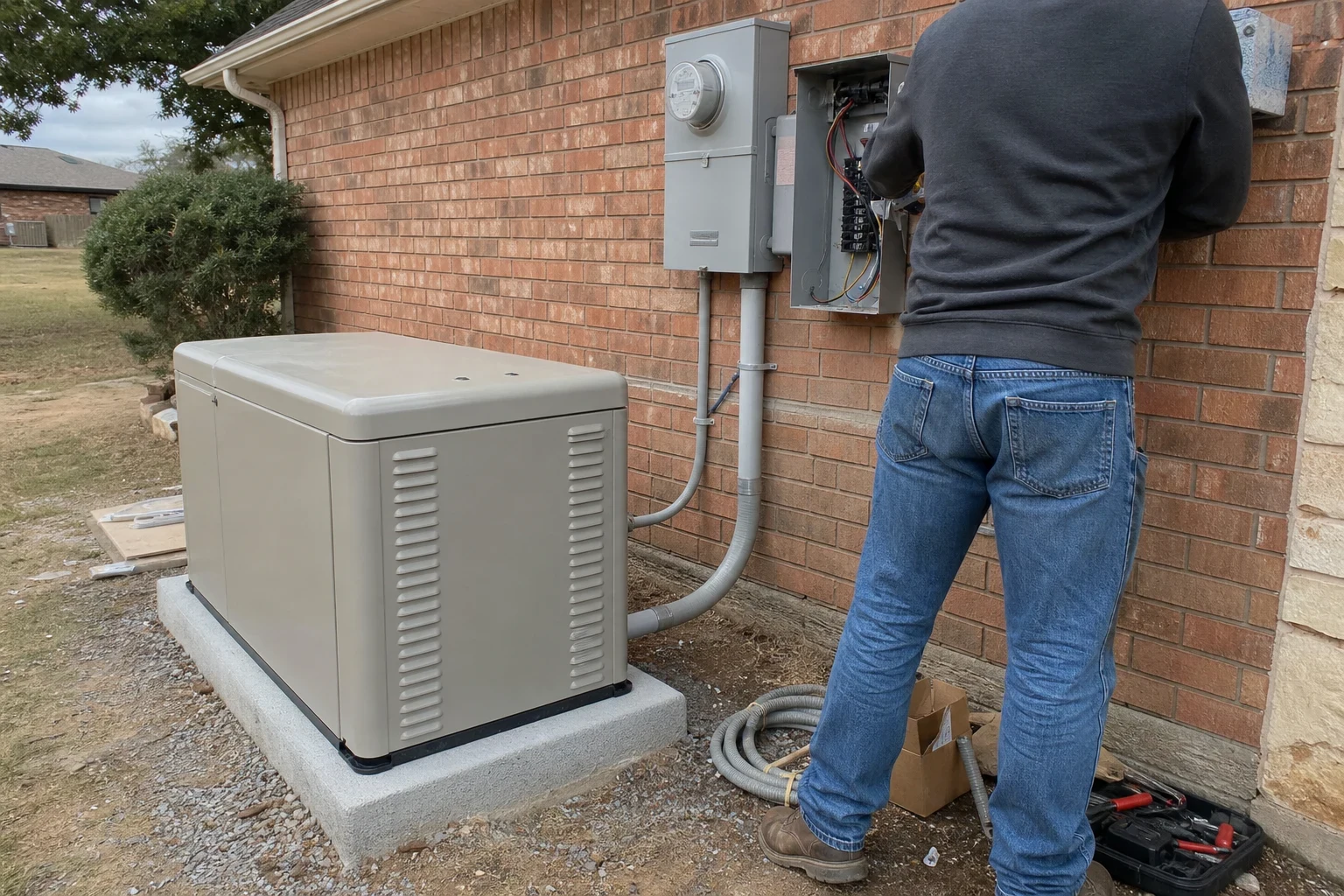
We install standby generators and portable generator hookups that are sized to what your home actually draws, wired through the right transfer equipment and placed where they are easy to service. The goal is a unit that starts when it should and keeps running for many years.
Backup power that fits the home you already have
A generator is only as good as the way it connects to your home. We start with your existing panel, wiring and fuel source, then choose a unit and transfer setup that work with them instead of against them. That keeps the electrical system you already have in good shape and avoids paying for capacity you will never use.
Most of our installs fall into two groups. A permanent standby generator runs on natural gas or propane and switches on by itself when utility power drops. A portable generator inlet with a panel interlock lets you plug in a generator you already own and power chosen circuits safely, without extension cords running through a window.
When North Texas summer storms or a winter ice event knock out power, a well-planned system means the refrigerator, the furnace blower or the well pump keep working. If you are weighing a quieter, fuel-free option, our Home Battery Backup Systems page covers that path.
What comes with a generator install
Sizing from a load review
We go room by room and note what needs to stay on during an outage. That list sets the generator size, so it neither runs flat out nor sits oversized and barely used.
Transfer switch or panel interlock
A standby unit gets an automatic transfer switch that cuts your home off from the utility before the generator kicks in. A portable setup gets an outdoor inlet and a listed interlock. In both cases, power cannot flow back onto the utility lines.
Setting the pad and unit
The unit sits on a level pad with the distance from windows, doors and vents that the maker and code call for. We also leave working room around it so later service is easy.
Wiring, plus fuel timing
Feeders and control wiring run in proper conduit. A plumber or your propane supplier makes the fuel connection, and we line up our schedules with theirs.
First start and a tour of the controls
We run a full transfer test, set the weekly exercise cycle and show you the controls, status lights and main shutoff. You also get a brief note on the routine service the unit will need.
When it makes sense to plan a generator
- Outages are getting expensive
- Lost groceries, a chilly house or a well pump that quits during a long outage is when most people start looking at backup power. Planning ahead of the next storm leaves you more options.
- Someone in the house depends on power
- Medical devices, a home office or a relative who struggles in heat or cold turns reliable power into a need, not a nice extra.
- Your portable generator runs on cords
- Cords run through a doorway or a homemade backfeed cable put you and line workers at risk. An inlet with an interlock solves that the right way.
- The panel is close to full
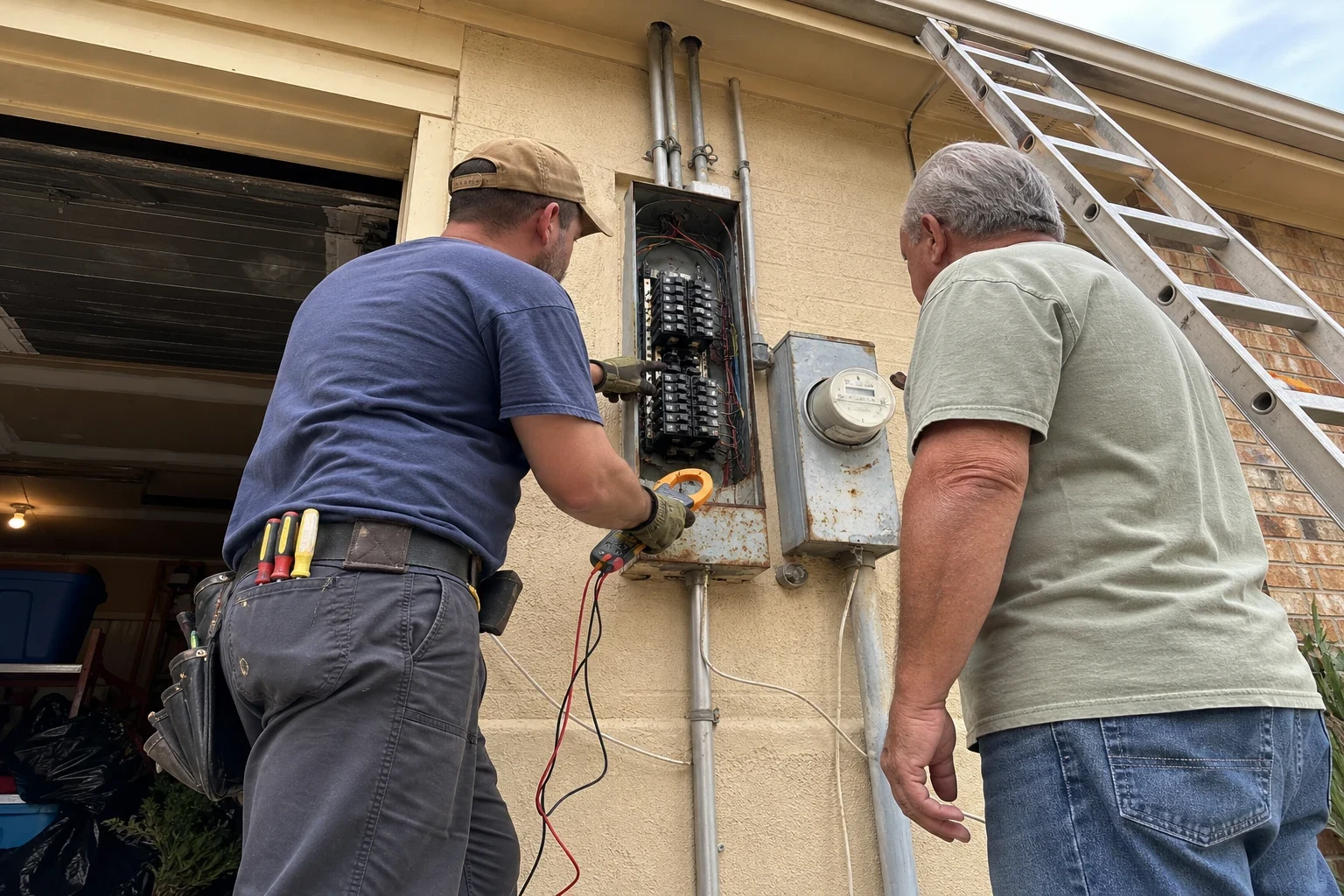
- If breakers already trip or there are no open spaces, adding generator equipment is a good reason to look at the panel. In some homes a Panel Upgrades visit comes first.
How the work goes, from first visit to first start
- 1
Site visit and plan
We look at your panel, your loads and where the unit can sit. You get a written scope that names the generator size, the transfer equipment and the placement.
- 2
Permits and scheduling
We pull the permits required by the local jurisdiction and schedule the work around fuel coordination and equipment delivery.
- 3
Installation day
We set the pad and the unit, install the transfer switch or interlock, and run the wiring. We protect walkways and floors where we work and clean up before we leave.
- 4
Inspection and handoff
After the inspection, we run a live transfer test with you watching, then go over the controls and the service schedule.
What moves the cost of a generator install
Every home starts from a different panel, fuel source and yard, so we price each job after the site visit. The estimate lists each part of the work separately, and nothing is added without talking with you first.
- Generator type and size
- A whole-home standby unit costs more than one sized for essential circuits, and both cost more than a portable inlet setup.
- Transfer equipment
- An automatic transfer switch, a load-shedding module or a simple interlock each carry different material and labor.
- Distance and placement
- Longer runs between the unit, the panel and the fuel source mean more wire, more conduit and more trenching or wall work.
- Condition of your panel
- An older or full panel may need upgrades or corrections before it can safely accept generator power.
- Permits and site prep
- Permit fees, pad preparation and fuel connection work from the plumber or propane supplier all factor into the total.
Generator installation questions
- How big a generator does my home need?
- It depends on what you want running during an outage, not the size of the house. We add up the starting and running loads of the circuits you choose, including the AC or heat if you want them. That number sets the generator size, with some headroom so it is not working at its limit.
- Can you connect the portable generator I already own?
- Usually, yes. We install an outdoor inlet and a listed interlock on your panel so you can power selected circuits safely. We check that your generator's output and cord match the inlet before we start.
- Do you pull permits for generator installs?
- Yes. We handle the permits and inspections required by the local jurisdiction for the electrical work. The fuel connection may need its own permit, which the plumber or propane supplier handles.
- How long does the installation take?
- On-site work for a standby unit usually takes one to two days once permits and equipment are ready. An inlet and interlock is often done in part of a day. We give you a clear schedule at the planning stage.
- Natural gas or propane?
- If you already have natural gas service with enough capacity, it is usually the simplest choice because you never refill a tank. Propane works well where gas is not available, but it means sizing and maintaining a tank. We walk through both during the visit.
- What upkeep will the generator need?
- Standby units need oil, filter and battery attention on a regular schedule, plus a check of the transfer switch. Regular care is what keeps a generator starting reliably for years. Our Generator Service & Repair page covers that work.
Get backup power planned before the lights go out
We check your panel, your loads and your yard, then map out a generator setup that suits your home and stays simple to maintain for years.